





Eye For Film >> Movies >> Niko (2026) Film Review


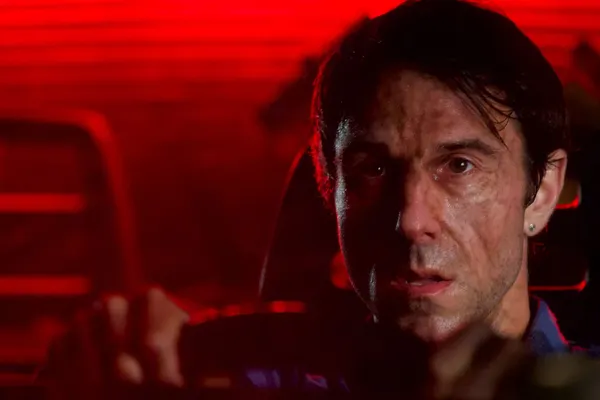

“You’re not getting it,” says the young woman in the restaurant. “Girls don’t want to be happy. They want to be free.”
Women like Niko (Tiffany Young) don’t usually get to be either. That is, they exist within cinema as fetishised objects, beautiful and elusive, mysterious and fascinating; they don’t get to be rounded human beings. Existing as a human being within the crushing pressure of such a space is a difficult thing to achieve. To give her life meaning, Niko has chosen to dedicate it to romance. She is determined to feel and to connect to the world as intensely as possible, but there is a price to be paid for that. Often we see such characters die. Julien Birban Levy’s film flirts with that idea, but importantly, what happens in the end will result not from some inescapable alignment of the heavens but from Niko’s own considered decision.

Screened as part of the 2026 Fantasia International Film Festival, the film is set in a near-future Seoul where everybody is talking about the end of the world. It’s likely to be our last decade, say specialists at the new Earth Summit. Most people are living for the moment. A digital curfew applies from 9pm, so gone is the age of people living permanently through their phones. Our heroine scrapes a living by running Locked Out Company Niko, providing conversation and support to people who are stuck outdoors or in corridors at night whilst they wait for locksmiths. She personally inhabits a cluttered but delightfully eclectic apartment which feels like an extension of her personality, but she’s behind on her rent. She loves Jeremy (Sandor Funtek) but is not sure that love is enough.
A photographer who takes only one photograph a week, trying to make certain that it will capture the perfect moment, Jeremy often finds his camera coming to rest on Niko. He has a day job with a travel agency which only sells flights between Korea and Kenya, allowing for a subplot about a lonely middle-aged woman whose own life has been set askew by romance. Sadly, Jeremy’s devotion to Niko does not give him an insight into her moods; his adoration, if anything, inhibits understanding. When Niko meets voice actor Jiyoon (Soy Kim) in the course of her work, and the two become friends, he feels shut out; but when Niko disappears, he and Jiyoon develop their own bond whilst searching for her.
By taking us into the interior space of a type of character usually only seen from the outside, Birban Levy is able to engage with the romantic as more than an observed trope, exploring both the emotional and the intellectual effort Niko is making to get to grips with her situation. At the same time, the film’s wider perspective, as we wander around with Jeremy and Jiyoon, lets us explore the way that other people are adjusting to the apocalyptic situation, from those who feel compelled to try to start conversation about it, to those demographics notable by their absence. Happiness still seems easy to come by on a short term basis, though disappointing employment continues to create misery; but what does freedom mean in such a world? By extension, what does it mean in ours?
Luminous cinematography and great attention to the detail of costumes of set decoration, together with a well chosen soundtrack, gives the film a deeply alluring quality. This enhances the discomfort associated with the clinical spaces we sometimes glimpse, and of a certain tone in Niko’s voice as she wrestles with despair. The decision she eventually makes will be difficult for some viewers to come to terms with, but her psychological journey is clearly delineated, even if the practical details are not made explicit, and it should thus be easy enough to grasp what it means to her. This might, in turn, provoke questions about how much agency individuals ought to be allowed, which is an intriguing thing to juxtapose with what seems to be an increasingly authoritarian society.
Are cinemagoers truly willing to engage with the spirit of a rebel, or is their attraction merely to the superficial glamour of it all? To what degree is it necessary to compromise romance in order to make way for love? These are questions to which every viewer will have to find their own answers. Atmospheric and immersive, Birban Levy’s film will wrap itself around you like a dream, but it still manages to provoke, and to a purpose.
Reviewed on: 23 Jul 2026


Director: Julien Birban Levy
Writer: Julien Birban Levy
Starring: Tiffany Young, Sandor Funtek
Year: 2026
Search database: